How Telegram Is Winning the AI Race With Better Integrity — And Why WhatsApp, Signal & RCS May Struggle to Catch Up
AI Is Reshaping Messaging — One Platform Leads
AI is slowly becoming part of everyday messaging. Not just chatbots, but smart assistants, automated services, shopping helpers, customer support agents, and even mini apps inside chat. Among all messaging platforms, Telegram is quietly moving ahead in this space.
While WhatsApp, Signal, and RCS each have their strengths, Telegram's open architecture and developer-first philosophy give it a structural advantage in the AI race. Let's break it down.
Telegram's AI Advantage: Built-in Bot Ecosystem
Telegram has supported Bots — automated accounts that respond to messages using programmed logic or AI — for years. Anyone can create a bot using Telegram's open API (Application Programming Interface), a system that allows apps to talk to each other.
This means businesses can build AI assistants easily, developers can create smart tools, and users can access AI without leaving Telegram. You can order food, generate images, translate text, manage communities, and even run crypto tools inside Telegram chats.
That flexibility is a big reason Telegram is ahead. No approval gates, no walled gardens — just build, deploy, and iterate.
MCP Servers & AI Agents: The Next Frontier
Telegram is now aligning with advanced AI systems like MCP Servers (Model Context Protocol) — a system that allows AI models to securely access tools, data, and services. Instead of AI just chatting, it can access live data, connect to external services, perform actions securely, and work like an Agent — an AI system that acts on your behalf instead of just answering questions.
This changes messaging from simple conversation to action-driven intelligence. Imagine telling an AI inside Telegram: 'Book my flight, compare prices, and add it to my calendar.' And it actually does it. That's where things are heading.
Stronger Integrity & Transparency
Telegram positions itself as privacy-focused but also open. Key differentiators include open Bot APIs, less dependency on ad-driven tracking, more developer freedom, and transparent bot labeling.
Compared to platforms that heavily control automation, Telegram allows innovation without excessive restrictions. This makes it deeply attractive for AI builders who want to ship fast and iterate without bureaucratic friction.

Why WhatsApp Struggles With AI Innovation
WhatsApp (owned by Meta) does support Business APIs — tools for companies to automate messaging. But the ecosystem is tightly controlled: bots require approval, there's a heavy compliance process, and the platform is business-focused rather than developer-friendly.
It's more structured and regulated. Good for enterprise compliance. But significantly slower for open AI innovation. Developers building cutting-edge AI agents hit walls quickly on WhatsApp.

Signal: Privacy-First, AI-Last
Signal is built around privacy-first encrypted messaging (end-to-end encryption where only sender and receiver can read messages). But it has no large bot ecosystem, very limited automation capabilities, and its focus is squarely on privacy — not AI expansion.
Signal may remain the most secure messaging app, but it's unlikely to become AI-rich anytime soon. The trade-off between absolute privacy and AI utility is real.
RCS Messaging: Carrier-Controlled, Not Community-Driven
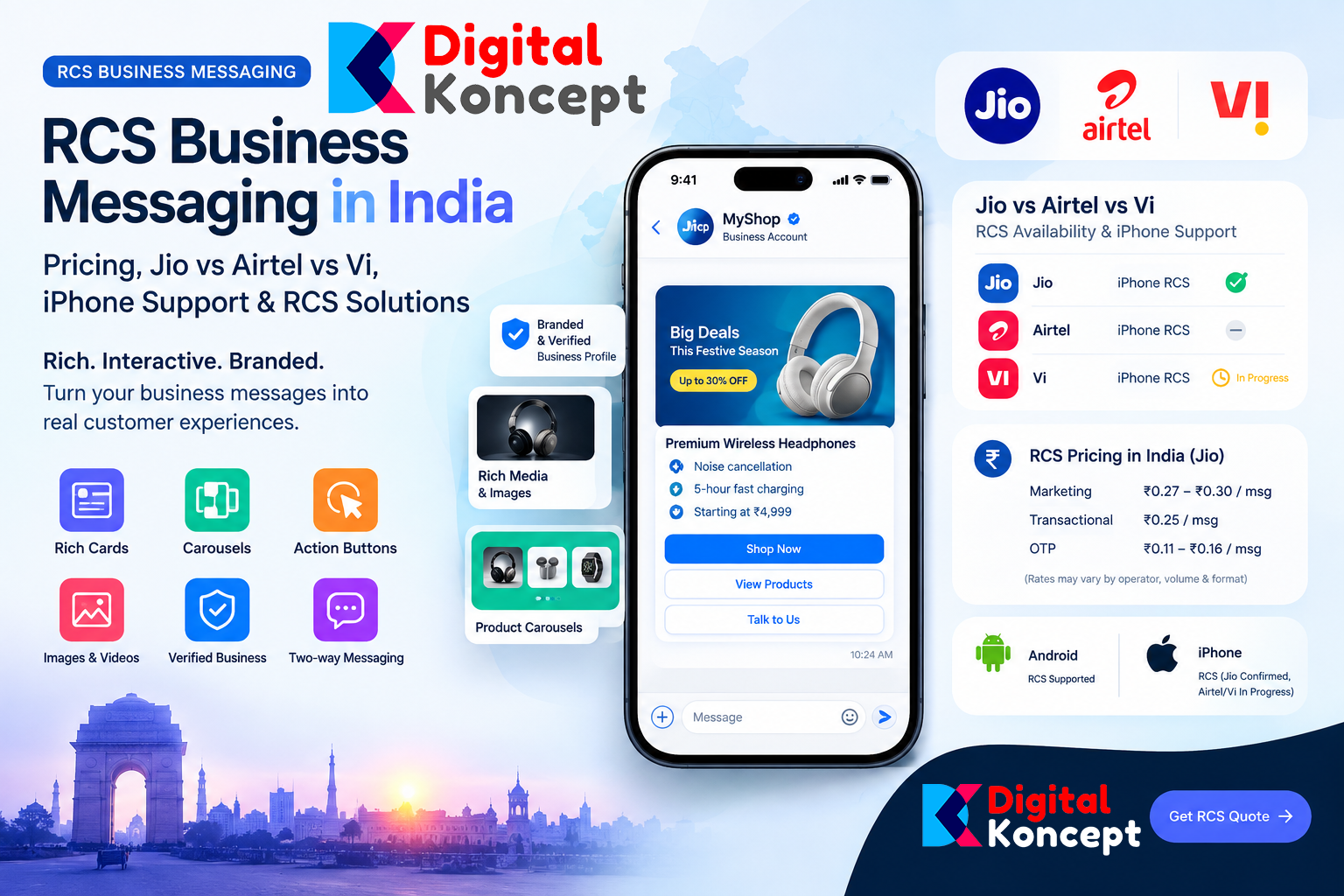
RCS (Rich Communication Services) is essentially upgraded SMS with media and branding support, mostly pushed by telecom operators and companies like Google. Its limitations are significant: it's dependent on carriers, offers less flexible AI integration, functions mostly as a business broadcast tool, and is not community-driven.
RCS is strong for marketing and branded messaging, but it was never designed as an AI playground. The carrier-dependency makes innovation cycles slow and fragmented.
Platform Comparison: AI Readiness at a Glance
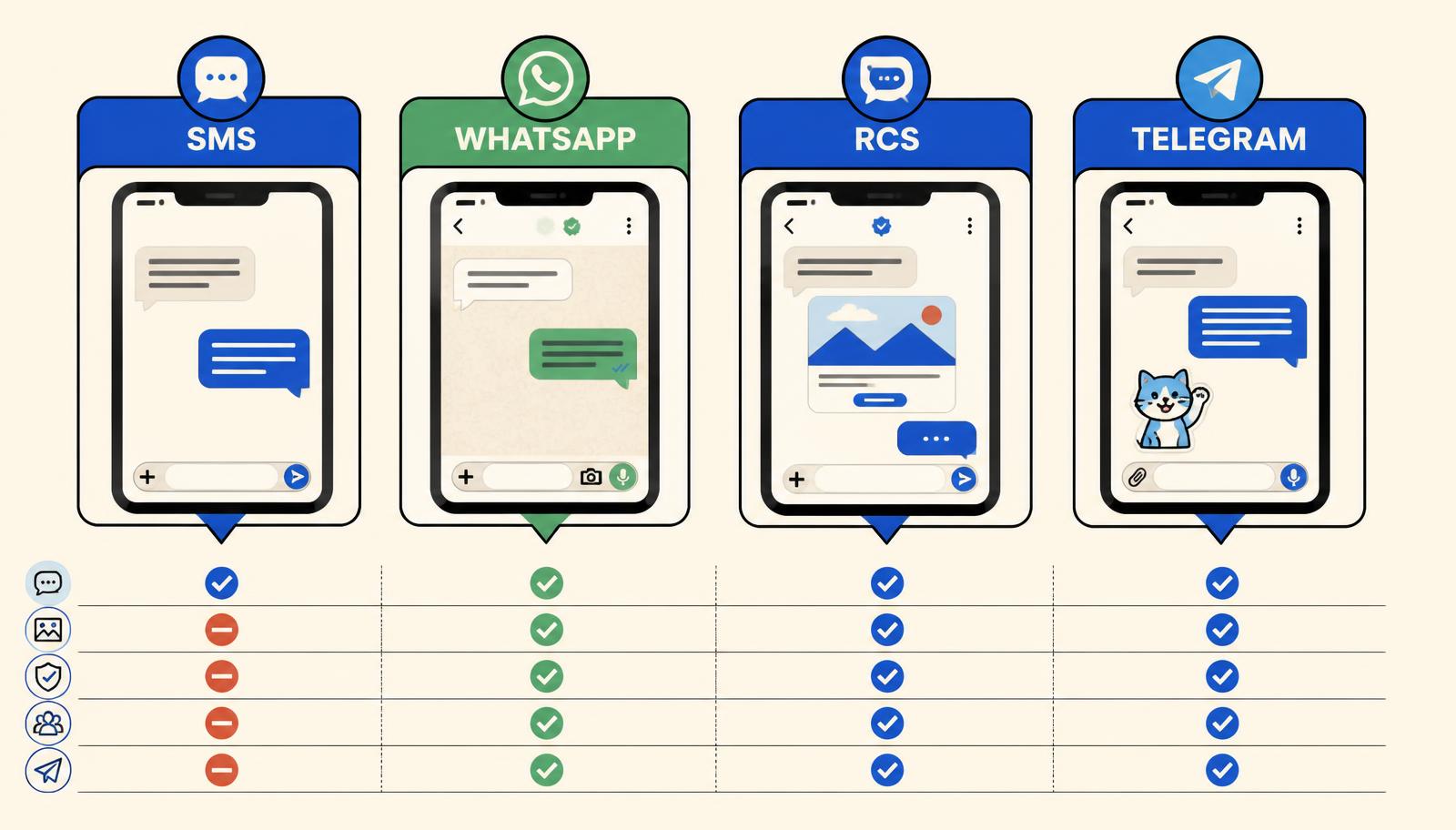
Open Bot System — Telegram: Yes | WhatsApp: Limited | Signal: No | RCS: No.
AI Agent Friendly — Telegram: High | WhatsApp: Medium | Signal: Low | RCS: Low.
Developer Freedom — Telegram: High | WhatsApp: Restricted | Signal: Very Limited | RCS: Carrier-Controlled.
Community Channels — Telegram: Advanced | WhatsApp: Limited | Signal: Limited | RCS: None.
Telegram acts as a messaging app, mini app store, AI integration layer, and community platform — all in one. That combination is rare and difficult to replicate.
What to Expect in the Near Future
AI Personal Assistants Inside Telegram: Custom AI agents will manage schedules, business workflows, customer support, and e-commerce — all within the chat interface.
MCP-Based Secure AI Actions: AI that doesn't just answer but accesses files securely, connects to cloud services, handles payments, and executes tasks with permission layers.
AI-Powered Communities: Telegram Channels and Groups may become AI-moderated, auto-summarized, spam-controlled, and data-analyzed in real time.
Decentralized AI Ecosystem: Telegram may allow independent AI tools, token-based AI services, and subscription AI bots — becoming the 'App Store of AI inside messaging.'
Final Thoughts: Philosophy Over Features
Telegram's edge is not just technology — it's philosophy. It encourages openness, developer participation, automation, and AI integration at every level.
While WhatsApp, Signal, and RCS focus on control, compliance, or telecom structure, Telegram behaves like an open AI platform disguised as a messaging app. That's why it feels like it's moving faster.
The real AI race in messaging has just begun. And right now, Telegram is running ahead.
Build Your Own Telegram Bot for Business
Custom Telegram bot development for automation, customer engagement, lead generation, and AI-powered marketing campaigns that drive real results.
Explore Telegram Bot Development →