How to Choose the Right Web Development Framework for Your Business in 2026: React, Next.js, WordPress or Custom?
Why the Framework Choice Matters More Than You Think
Choosing a web development framework is one of the most consequential technical decisions a business makes. It determines your site's performance, SEO ceiling, scalability, maintenance costs, developer availability, and how quickly you can ship new features. Pick the wrong framework and you're stuck with a slow, expensive-to-maintain site that needs a complete rebuild in 18 months. Pick the right one and you have a platform that grows with your business for 5–10 years.
In 2026, the landscape has consolidated around a few dominant options: React (with Vite) for single-page applications, Next.js for full-stack React with server-side rendering, WordPress for content-heavy sites, and fully custom solutions for unique requirements. Each has clear strengths, clear weaknesses, and a specific set of business use cases where it excels. This guide helps you make the right choice based on your actual business needs — not developer preference or hype cycles.
React (with Vite): The Modern SPA Powerhouse
React is the most popular JavaScript library for building user interfaces. Combined with Vite as a build tool, it offers an exceptional development experience: instant hot module replacement, fast builds, and a massive ecosystem of component libraries (shadcn/ui, Radix, Material UI). React + Vite is the default choice for interactive web applications — dashboards, SaaS tools, admin panels, internal tools, and any site where the user experience is more 'app' than 'document'.
Strengths: Unmatched component ecosystem and developer talent pool. Excellent for complex, interactive UIs with real-time updates. Fast development with reusable component libraries. Strong TypeScript support. Easy integration with backend APIs and services like Supabase, Firebase, or custom REST/GraphQL backends. Massive community — virtually any problem has been solved before.
Weaknesses: Client-side rendered SPAs have inherent SEO limitations — search engines must execute JavaScript to index content, which can delay or miss pages. Initial load time is higher than server-rendered alternatives because the browser must download and execute the JavaScript bundle before rendering anything. Not ideal for content-heavy, SEO-critical sites like blogs or e-commerce catalogs.
Best for: SaaS products, web applications, admin dashboards, internal tools, portfolio sites where interactivity matters more than SEO, and businesses that need rapid iteration with a large developer talent pool.
Next.js: Full-Stack React with SEO Superpowers
Next.js is a React framework that adds server-side rendering (SSR), static site generation (SSG), API routes, and a built-in file-based router on top of React. It solves React's biggest weakness — SEO — by rendering pages on the server before sending HTML to the browser. Google sees fully rendered content immediately, which is critical for ranking.
Strengths: Best-in-class SEO with server-side rendering and static generation. Excellent performance with automatic code splitting, image optimization, and edge caching. Full-stack capabilities — API routes let you build backend logic without a separate server. The App Router (introduced in Next.js 13+) supports React Server Components, reducing client-side JavaScript and improving performance. Vercel's hosting platform provides seamless deployment with global CDN.
Weaknesses: Steeper learning curve than plain React — the App Router, server components, and caching behaviour require understanding. Vendor lock-in risk if you rely heavily on Vercel-specific features. More opinionated than plain React, which limits flexibility in some architectural decisions. Hosting costs can be higher than static sites, especially with heavy SSR usage. The framework moves fast — major API changes between versions require periodic migration effort.
Best for: Marketing websites that need strong SEO, e-commerce storefronts, content-rich sites with dynamic data, SaaS landing pages, and any project that needs both excellent SEO and rich interactivity. Ideal when you want React's component model but need server-rendered pages for search visibility.
WordPress: The Content Management Giant
WordPress powers over 40% of all websites in 2026. Its strengths are mature content management, a vast plugin ecosystem (60,000+ plugins), and a low barrier to entry for non-technical users. For businesses that primarily need a blog, a brochure site, or a simple e-commerce store (via WooCommerce), WordPress remains a pragmatic choice — especially when the content team needs to publish and edit without developer involvement.
Strengths: Non-technical users can manage content through a familiar admin interface. Thousands of pre-built themes for rapid launch. Plugins for virtually everything — SEO (Yoast/RankMath), forms, analytics, e-commerce, memberships, booking systems. Huge freelancer and agency ecosystem means finding WordPress developers is easy and affordable. Strong SEO out of the box with proper plugin configuration.
Weaknesses: Performance is a persistent challenge — WordPress sites tend to be slow unless carefully optimized, which is ironic because speed is a ranking factor. Plugin bloat is a real problem — each plugin adds database queries, HTTP requests, and potential security vulnerabilities. Security is the biggest concern — WordPress is the #1 target for hackers due to its market share, and outdated plugins are the most common attack vector. Customization beyond themes requires PHP knowledge, and complex custom features often require fighting the WordPress architecture rather than working with it.
Best for: Content-heavy blogs, small business brochure sites, simple e-commerce (WooCommerce), membership sites, and organizations where non-technical staff need to publish content regularly without developer help. Not ideal for complex web applications, real-time features, or sites where performance is a competitive advantage.
Custom Development: When Off-the-Shelf Won't Cut It
Sometimes your business requirements don't fit neatly into any framework's paradigm. Custom development — building a bespoke solution with the exact technology stack your use case demands — is the right choice when you need a highly specialized user experience, complex integrations with legacy systems, real-time data processing, or a product that will become your core competitive advantage.
Strengths: Complete control over architecture, performance, and user experience. No framework constraints — you build exactly what you need. Can optimize for your specific performance requirements (sub-100ms response times, millions of concurrent users, complex data pipelines). No dependency on third-party framework roadmaps or breaking changes. Intellectual property is entirely yours.
Weaknesses: Highest development cost and longest time-to-market. Requires a strong technical team to build and maintain. Every feature — routing, authentication, state management, deployment — must be built or chosen individually. No pre-built ecosystem of plugins or themes. Onboarding new developers takes longer because they must learn your custom architecture.
Best for: Enterprise applications with unique requirements, fintech and healthtech products with strict compliance needs, high-traffic platforms requiring custom performance optimization, and products where the technology itself is the differentiator. Not recommended for standard websites, blogs, or businesses that need to launch quickly with limited budget.
Head-to-Head Comparison: Performance
Page load speed directly impacts SEO rankings, user experience, and conversion rates. Here's how the options compare: React (Vite) SPAs typically achieve 1.5–3 second initial load times, with subsequent navigation being near-instant due to client-side routing. The bottleneck is the initial JavaScript bundle download and execution. Code splitting and lazy loading mitigate this, but the first paint will always be slower than server-rendered alternatives.
Next.js with SSG achieves sub-1-second load times for static pages — HTML is pre-built and served from a CDN. SSR pages add 200–500ms for server rendering but still outperform client-side React on first meaningful paint. With React Server Components, Next.js can deliver interactive pages with significantly less client-side JavaScript than traditional React.
WordPress performance varies wildly — a well-optimized WordPress site with minimal plugins, a lightweight theme, and proper caching (WP Rocket, Cloudflare) can achieve 1–2 second load times. But the average WordPress site loads in 3–5 seconds due to plugin bloat, unoptimized images, and cheap shared hosting. The performance ceiling is lower than React or Next.js.
Custom solutions can achieve the absolute best performance — when optimized specifically for your use case. But this requires deliberate engineering effort; a poorly built custom solution can easily be slower than a well-configured WordPress site.
Head-to-Head Comparison: SEO
SEO capability is often the deciding factor for marketing-focused websites. React SPAs historically struggled with SEO because search engines couldn't easily index JavaScript-rendered content. In 2026, Google's rendering engine handles most React SPAs, but there's still a delay between crawling and indexing, and some pages may not be rendered at all during high-volume crawls. For SEO-critical pages, this is a real risk.
Next.js is the gold standard for SEO in the React ecosystem. Server-rendered HTML means Google sees your content immediately — no rendering delay, no JavaScript execution required. Metadata management is built in, structured data is easy to implement, and features like automatic sitemap generation, image optimization, and built-in analytics support a comprehensive SEO strategy.
WordPress has excellent SEO support through plugins like Yoast SEO and RankMath, which provide on-page optimization, XML sitemaps, schema markup, and readability analysis. For content-focused SEO (blog posts, articles, guides), WordPress is hard to beat because of how easy it makes content creation and optimization for non-technical users.
Custom solutions have unlimited SEO potential but require manual implementation of everything — meta tags, structured data, sitemaps, canonical tags, Open Graph, robots directives. Nothing is 'free' — every SEO feature must be deliberately built.
Head-to-Head Comparison: Cost
Total cost of ownership includes development, hosting, maintenance, and opportunity cost. React (Vite) projects are relatively inexpensive to build and host. Development cost for a typical business website: ₹1,50,000–₹5,00,000. Hosting on platforms like Vercel, Netlify, or Cloudflare Pages is free or very cheap for static builds. Maintenance is low if the site doesn't require frequent updates.
Next.js has similar development costs to React (₹2,00,000–₹6,00,000) but hosting costs are higher if you use SSR — Vercel's pricing scales with server-side compute usage. For high-traffic sites with heavy SSR, hosting can reach ₹5,000–₹20,000/month. Static-only Next.js sites can be hosted cheaply on any CDN.
WordPress has the lowest initial development cost: ₹30,000–₹2,00,000 for a theme-based site. But ongoing costs add up — premium plugins (₹5,000–₹20,000/year each), managed WordPress hosting (₹500–₹5,000/month), security monitoring, and regular updates. Over 3 years, a WordPress site often costs more than a React or Next.js site due to maintenance overhead.
Custom development has the highest upfront cost: ₹5,00,000–₹25,00,000+ depending on complexity. But for businesses at scale, the per-unit cost decreases as the solution handles more traffic, more features, and more users without the licensing costs of third-party plugins or platforms.
Head-to-Head Comparison: Developer Availability
Finding and retaining developers directly impacts your ability to build, maintain, and scale your website. React developers are the most abundant in the Indian market — React is the most-used frontend framework globally, and Delhi-NCR has thousands of React developers ranging from junior (₹4–₹8 LPA) to senior (₹15–₹35 LPA). Finding React talent is never a problem.
Next.js developers are a subset of React developers. Most experienced React developers can work with Next.js, but the App Router, server components, and edge middleware require specific knowledge. Senior Next.js developers command a 10–20% premium over pure React developers. Availability is good in metros but thinner in tier-2 cities.
WordPress developers are the most affordable and widely available — PHP developers who can customize WordPress themes and build plugins are plentiful. However, there's a wide quality gap: many WordPress 'developers' only know how to install plugins and configure themes. Finding a developer who can build custom WordPress plugins or optimize performance requires more careful hiring.
Custom solution developers are specialized and expensive. Depending on the tech stack (Go, Rust, Elixir, Python, etc.), finding the right talent can be challenging. You'll need a strong technical lead to make architectural decisions, and onboarding takes longer because there's no standard framework documentation for new hires to learn from.
Decision Framework: 5 Questions to Find Your Answer
Question 1: Is SEO critical for your business growth? If most of your customers find you through Google Search, you need server-rendered HTML. Choose Next.js for the best SEO-performance balance, or WordPress if your team is non-technical and content is your primary asset.
Question 2: How interactive is your user experience? If your site feels more like an application (dashboards, real-time data, complex forms, drag-and-drop), React (Vite) or Next.js is the right choice. WordPress and static solutions can't deliver rich interactivity without bolting on JavaScript frameworks, which defeats the purpose.
Question 3: Who will manage the content? If marketing or editorial teams need to publish and edit content independently, WordPress's admin interface is hard to beat. React and Next.js require a headless CMS (Sanity, Contentful, Strapi) to achieve similar editorial workflows, adding complexity and cost.
Question 4: What's your budget and timeline? If you need to launch in 2–4 weeks with under ₹1,00,000, WordPress with a premium theme is the pragmatic choice. If you have ₹2,00,000–₹5,00,000 and 6–8 weeks, React or Next.js delivers a more polished, performant result. If you have ₹5,00,000+ and specific requirements, consider custom development.
Question 5: How important is long-term scalability? If you expect traffic growth from 1,000 to 100,000 monthly visitors, Next.js with edge deployment scales effortlessly. WordPress requires increasingly expensive hosting and optimization as traffic grows. React SPAs scale well on CDNs but may need architecture changes for SEO at scale.
The Hybrid Approach: Using Multiple Technologies Together
In practice, many successful websites in 2026 combine technologies. A common pattern: WordPress as a headless CMS (content management only) with Next.js as the frontend (rendering and user experience). This gives your editorial team the familiar WordPress admin while delivering the performance and SEO benefits of Next.js. The CMS and frontend communicate via WordPress's REST API or WPGraphQL.
Another pattern: A React SPA for the logged-in application experience (dashboard, settings, user area) with a Next.js or static marketing site for the public-facing pages (homepage, pricing, blog). This is how most SaaS companies structure their web presence — each technology handles what it does best.
A third pattern: Static site generators (Astro, Eleventy) for ultra-fast marketing pages, with React islands for interactive components (pricing calculators, contact forms, demos). This delivers near-zero JavaScript on static pages with full interactivity where needed.
The key principle: don't force one technology to do everything. Use the right tool for each part of your web presence, and connect them through APIs, shared design systems, and consistent deployment pipelines.
Common Mistakes Businesses Make When Choosing a Framework
Following developer preference over business needs: Your CTO or lead developer has a favourite framework, and every project somehow needs it. The framework choice should be driven by business requirements (SEO needs, content workflow, performance targets, budget) — not by which technology your team enjoys working with.
Over-engineering for scale you don't have: A startup expecting 500 monthly visitors doesn't need a microservices architecture or a custom rendering engine. Start with the simplest technology that meets your requirements and evolve as your needs grow. You can always migrate later — but you can't get back the 6 months and ₹10,00,000 spent over-engineering your MVP.
Ignoring maintenance costs: The cheapest site to build is often the most expensive to maintain. A ₹50,000 WordPress site that needs ₹10,000/month in plugin updates, security patches, and hosting upgrades costs ₹1,70,000 in year one — comparable to a ₹2,00,000 React site with ₹500/month hosting that runs maintenance-free.
Not considering the exit strategy: What happens if you need to switch agencies, bring development in-house, or rebuild in 3 years? WordPress sites are portable (export content, import elsewhere). React and Next.js codebases are transferable to any JavaScript developer. Custom solutions on niche frameworks may lock you in to a specific development team.
Final Recommendation: Our Framework for the Framework Decision
After building hundreds of websites for Indian businesses across every category, here is our practical recommendation: For most service businesses, SMBs, and startups that need a professional web presence with strong SEO, React with Vite (for app-like experiences) or Next.js (for SEO-critical marketing sites) delivers the best long-term value. The initial cost is moderate, performance is excellent, the developer ecosystem is robust, and the technology will remain relevant for years.
Choose WordPress only if your team is non-technical, content publishing volume is high (10+ pages/week), and you're comfortable with ongoing maintenance overhead. For large content operations (media houses, publishing platforms), WordPress with a headless frontend remains a strong choice.
Choose custom development only if you have specific technical requirements that no framework satisfies, a strong engineering team to build and maintain the solution, and a budget that supports bespoke development. For 95% of businesses, a well-built React or Next.js site will outperform a custom solution on cost, time-to-market, and maintainability.
Whatever you choose, prioritize Core Web Vitals (LCP, FID, CLS), mobile-first design, and proper SEO implementation from day one. A fast, well-structured, mobile-optimized site on any framework will outperform a slow, poorly built site on the 'best' framework every time.
Professional Web Development Services
From React SPAs to full-stack Next.js applications — our team builds fast, SEO-optimized, mobile-first websites using the right framework for your business goals.
Explore Web Development Services →Need a Mobile App Too?
Extend your web presence with native iOS and Android apps — or build cross-platform with React Native. Same design system, consistent user experience, unified backend.
Explore App Development →Related Articles

Why Website Speed Matters More Than Ever in 2026
6 min read
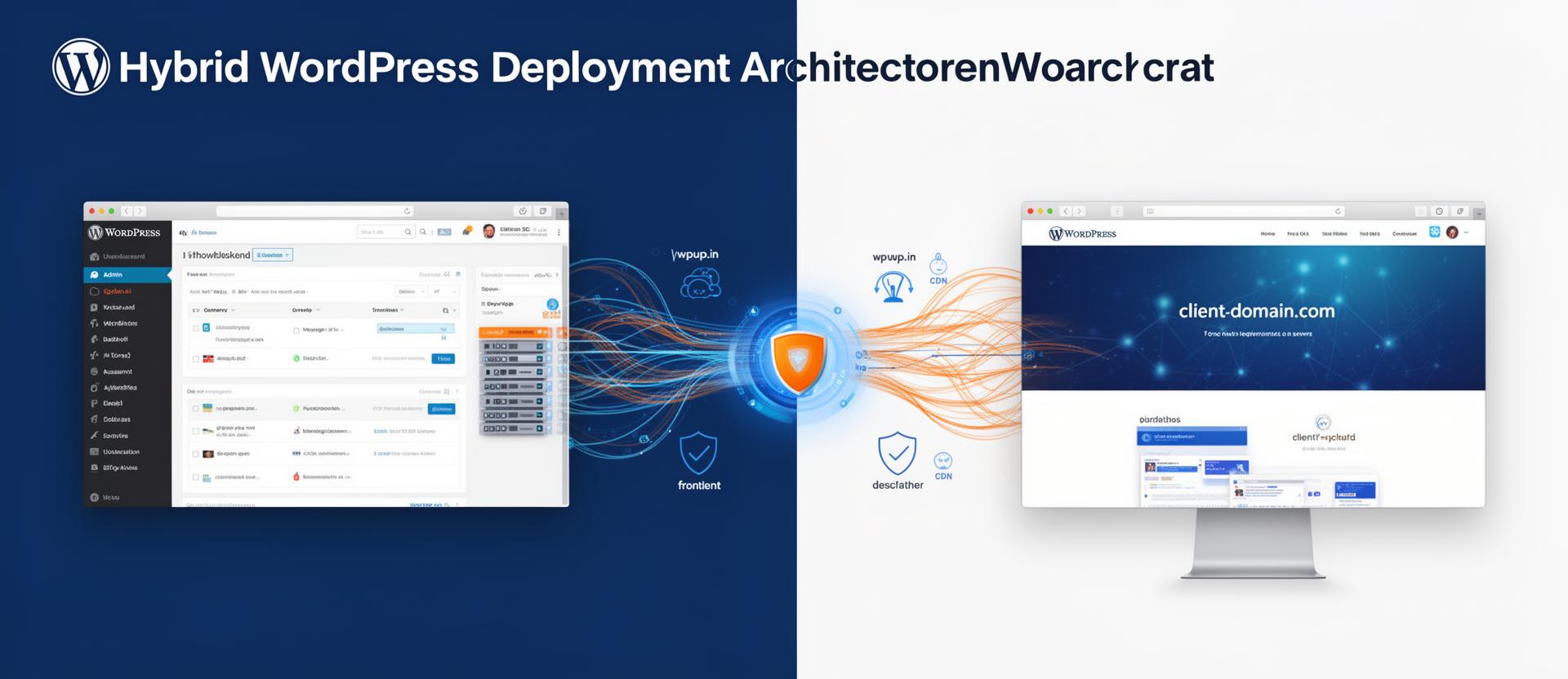
Hybrid WordPress Deployment: How wpup.in Powers Static Websites With WordPress Backend on a Separate Domain
14 min read

Vercel vs Cloudflare in 2026: Next.js vs Vinext, AI Game-Changers, Cost Breakdown & Best Practices for New Projects
16 min read